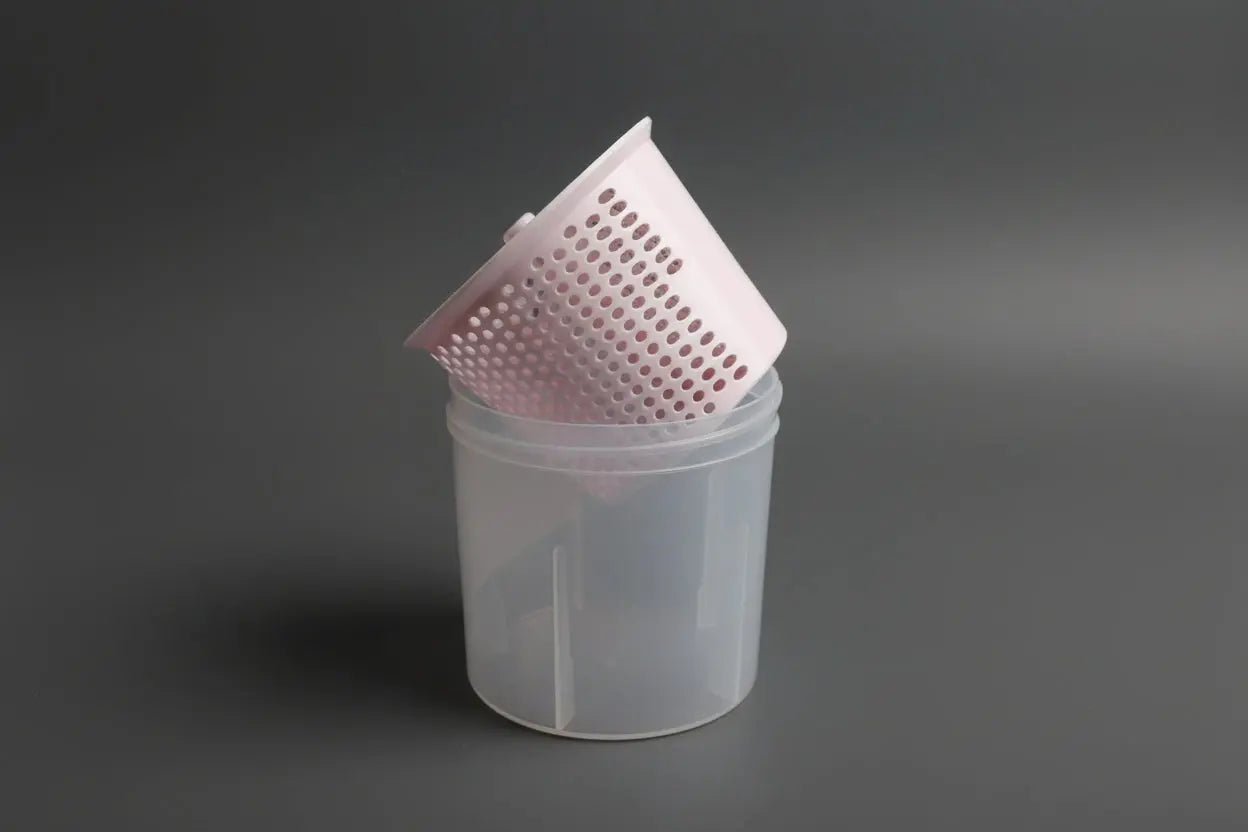
Varroa Check
Varroa Check
Couldn't load pickup availability
Comprehensive Varroa Checks for Beekeepers
Varroa Check is a practical tool for easy Varroa infestation monitoring on adult bees.
Alcohol wash or sugar roll. These methods are now available in the same tool. It's up to you to choose the method that suits you best!
Alcohol Wash
- Alcohol wash consists of immersing a sample of bees into alcohol and then gently shaking the Varroa Check to detach the phoretic mites so they can be counted
- Advantages: Fast and easy, it is recognized as the most accurate, reliable, and economical option for beekeepers
- Alcohol Method video
Icing Sugar Roll
- With this method, the bees are rolled with powdered sugar, causing the mites to separate from the bees
- The Varroa Check is then gently shaken, causing the sugar and the mites to pass through the white basket's holes
- Advantages: Inexpensive and keep the sample of bees alive
- Sugar Roll Method video
Sample Size
- There are two lines on the white basket of the Varroa Check
- Lower line corresponds to about 200 bees and the upper line corresponds to 300 bees
- We advise you to take 300 bees to obtain the most accurate results possible
- In the case of weaker colonies, you can reduce this number to 200 bees
- You will obtain your infestation percentage by dividing the number of varroa found by 2 (if 200 bees) or 3 (if 300 bees)
Example: If you find 5 varroa mites with 300 bees, you have an infestation percentage of 5/3 = 1.66%
Number of mites = % Varroa infestation
3 for 300 bees
2 for 200 bees
(adjust according to sample size)
Features
- Designed for effectiveness: The filter basket is the key to Varroa Check’s reliability
- Quick and easy to use 3 easy steps
- Easily transportable and built to last
- Tight-fitting lid is leak-free and comfortable to use
- Two molded guidelines allow for samples of 200 or 300 bees
- Designed for effectiveness: Fallen mites pass through holes in the base and sides of the basket
- Transparent bowl allows accurate counting and reliable sampling
Depending on location and the time of year, alert thresholds range from > 1% to 5%. Check with your local association to determine thresholds in your area.
The Importance of Varroa Checks
Varroa checks are critical for maintaining the health of honeybee colonies. These checks help beekeepers monitor for the presence of Varroa mites, which can severely impact bee populations. By regularly performing these checks, beekeepers can detect infestations early, allowing for timely treatments. An effective Varroa management strategy not only protects bees but also ensures a successful honey harvest.
How to Conduct a Varroa Check
To perform a Varroa check, start by inspecting your hives at least once every two weeks during active months. Gently open the hive and examine the bees for any signs of mites, such as deformed wings or sick bees. Use a sticky board or sugar roll technique to quantify the mite population. By understanding the mite load, you can take appropriate action, either enhance your management practices or apply treatments against the mites.
Effective Management Strategies
Because Varroa mites can quickly multiply, implementing effective management strategies is key. Regular checks allow you to decide on treatments based on the mite levels you observe. Although chemical treatments are available, alternative methods such as drone brood removal or breeding for Varroa-resistant bees can also be effective. Having a well-rounded approach not only fights Varroa but promotes the overall health and longevity of your bee colonies.
What Are Varroa Checks?
Varroa checks are crucial for monitoring mite populations in beehives. These checks help beekeepers determine if their colonies are at risk due to Varroa mites, which can weaken and kill bees. It's essential to perform these checks regularly, especially during the active seasons. By being proactive, you can protect your hive from potential collapse, ensuring your bees remain healthy and productive.
How to Perform a Mite Test
Conducting a mite test is straightforward. First, collect a small sample of bees, usually around 300, from your hive. Then, shake them into a container with powdered sugar or use alcohol to separate the mites from the bees. This process provides a clear indication of the mite population. If you find a high number of mites, it's a signal that immediate action is needed, so your hive can thrive.
Importance of Regular Monitoring
Regular monitoring is vital for maintaining bee health. Since Varroa mites reproduce quickly, a small infestation can escalate rapidly if not addressed. By performing systematic Varroa checks and mite tests, beekeepers can keep their colonies strong. Not only does this safeguard the bees, but it also contributes to successful honey production, creating a thriving environment for both bees and beekeepers.
Understanding the Importance of Varroa Checks
Performing regular Varroa checks is vital for the health of your bee colonies. Varroa mites are one of the most significant threats to honeybee populations worldwide. These pests attach themselves to bees, feeding on their bodily fluids and weakening the hive. Regular mite tests can help you identify infestations early, allowing for timely treatment and ensuring the survival of your bees. By incorporating Varroa checks into your routine beekeeping management, you not only protect your bees but also maintain a thriving apiary that can produce high-quality honey. Regular monitoring is key to sustainable beekeeping practices.
How to Conduct a Mite Test
Conducting a Mite Test can be straightforward and is essential for effective pest management. There are various methods available, including the sugar roll, alcohol wash, and sticky traps. The sugar roll method involves shaking bees in powdered sugar to dislodge mites, allowing you to count the number of pests collected. This approach is relatively quick, and it provides instant results. The alcohol wash method, although a bit messier, gives accurate counts of mites by using alcohol to kill the bees temporarily. This understanding of how to effectively conduct a mite test is crucial for proactive hive management.
Choosing the Right Products for Varroa Management
There are numerous products available for effective Varroa management, including acaricides and natural treatments. While chemical treatments can be effective, many beekeepers are exploring natural alternatives to protect their hives. Essential oils, powdered sugar treatments, and drone brood removal are popular among those aiming for organic practices. It's important to choose options that align with your beekeeping philosophy while ensuring the health of your hives. Understand the strengths and weaknesses of each product through thorough research and perhaps consulting with veteran beekeepers. This knowledge will empower you to make informed choices for successful mite management.
Share